

How AI is Reshaping Venue Scheduling and Artist Booking
AI venue scheduling is shifting how talent buyers and promoters manage holds, offers, and settlements.
- Automated calendar systems eliminate double-bookings and surface optimal routing for tours.
- Smart booking tools generate offers in minutes using historical performance data.
- Contract automation reduces administrative bottlenecks without sacrificing deal precision.
- Live music automation is projected to drive the event management software market to $34.7 billion by 2029.
If you’re still manually juggling spreadsheets for every show, your competitors are already moving faster.
The live music management industry runs on tight margins and even tighter deadlines. When a tour manager needs an answer on availability within the hour, nobody has time to dig through disconnected spreadsheets or chase down contract templates buried in email threads. That pressure is exactly why AI venue scheduling has moved from theoretical advantage to operational necessity for serious venue operators.
Automation is now the primary driver behind event management software adoption, with traditional planning processes described as time-consuming, labor-intensive, and prone to errors. For venues booking 200+ shows annually, those inefficiencies compound into thousands of lost hours and missed opportunities.
The shift is happening now, and the operators paying attention are the ones pulling ahead.
What Does AI Venue Scheduling Actually Mean for Live Music Operators?
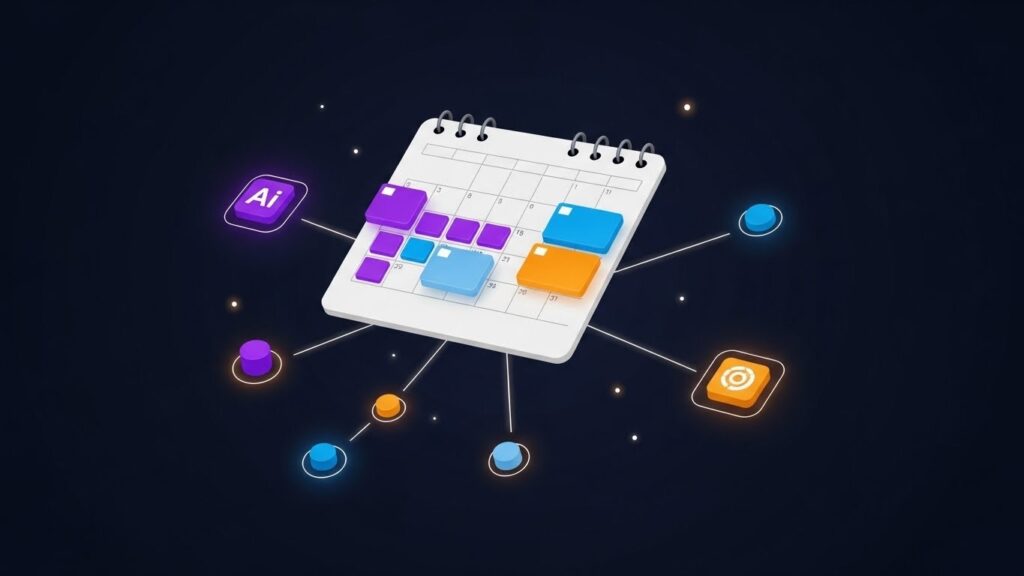
AI venue scheduling is about intelligent systems that learn from your booking patterns, anticipate conflicts before they happen, and surface opportunities you might otherwise miss.
Traditional scheduling software shows you what’s booked. Smart booking platforms show you what should be booked based on artist routing, historical performance in your market, and real-time availability across multiple rooms or venues. The difference between those two approaches can mean the gap between a packed calendar and unnecessary dark nights.
Consider how modern systems handle hold management. Instead of manually tracking first and second holds across emails and phone calls, automated platforms generate personalized offer templates, predict optimal pricing based on comparable shows, and send routine follow-ups without human intervention. Smart automation handles the mundane tasks so talent buyers can focus on relationship building and deal negotiation.
The technology also addresses one of the industry’s most persistent headaches: double-booking. AI-powered systems simultaneously cross-reference venue availability, artist tour routes, and radius clause restrictions. When a scheduling conflict emerges, the system flags it before you’ve committed to anything, protecting both your relationships and your revenue.
How Does This Differ from Generic Event Software?
General event management platforms treat all events the same. A corporate conference and a sold-out rock show require fundamentally different workflows. Live music automation tools understand concepts like holds versus confirms, promoter splits, and settlement procedures that generic solutions don’t accommodate.
Purpose-built systems also integrate with ticketing platforms to pull real-time sales data directly into your booking calendar. You can see exactly how a show is trending without waiting for weekly reports, giving you time to adjust marketing strategies or shift rooms if projections aren’t meeting expectations.
What Are Five Ways Smart Booking Is Making the Biggest Impact?
The applications for AI in venue operations span the entire booking lifecycle. Here’s where smart booking technology delivers the most measurable results:
- Calendar Intelligence
Advanced systems analyze your historical booking data to identify patterns. Which nights consistently underperform? Which genres draw strongest in your market? AI automatically surfaces these insights, helping you make smarter decisions about which shows to pursue and when to schedule them.
- Offer Generation
Creating customized offers used to require pulling data from multiple sources, manually running break-even calculations, and formatting everything into a presentable document. Now, intelligent booking platforms generate professional offers with pre-filled financial projections based on comparable past shows. What used to take an hour can happen in minutes.
- Tour Routing Optimization
For talent buyers managing relationships with multiple agents, AI can analyze available dates across your venue portfolio and suggest optimal routing that maximizes booking density while respecting artist restrictions. The system automatically accounts for travel logistics, market saturation, and venue capacity.
- Communication Automation
Routine communications like hold confirmations, advance requests, and settlement reminders no longer require manual sending. Automated workflows trigger at the appropriate times, ensuring nothing falls through the cracks while maintaining the professional touch that relationships in this industry demand.
- Financial Forecasting
Predictive analytics estimate ticket sales based on artist history, market conditions, and comparable events. These projections help you negotiate smarter deals and avoid overcommitting on guarantees that could hurt your bottom line.
From Holds to Settlements: How Does Live Music Automation Work?
The booking process in live music involves distinct phases, each with its own administrative burden. Live music automation addresses pain points across the entire workflow.
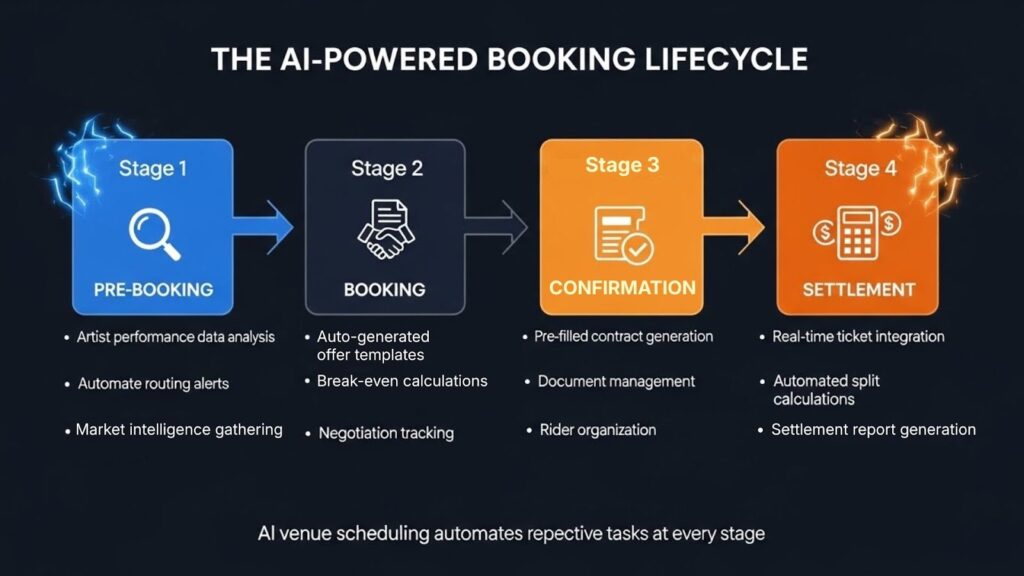
Pre-Booking: Research and Outreach
Before you can book a show, you need intelligence on which artists make sense for your venue. Modern platforms aggregate historical box office data, helping you evaluate artist performance across comparable markets. Rather than relying solely on agent pitches or personal instinct, you can make data-backed decisions about which acts justify their asking prices.
Artist research tools also track touring patterns and routing, alerting you when relevant acts have open dates in your region. That kind of proactive intelligence transforms talent buying from a reactive response to a strategic positioning.
Booking: Offers and Negotiations
Once you’ve identified a target artist, the offer process begins. AI venue scheduling platforms streamline this phase by auto-populating deal templates with venue-specific terms, historical pricing benchmarks, and calculated break-even points. You’re not starting from scratch every time.
Smart booking systems also track negotiation status across multiple pending deals, ensuring you never lose sight of where conversations stand. Automatic reminders prompt follow-up at appropriate intervals, maintaining momentum without requiring constant calendar monitoring.
Confirmation: Contracts and Logistics
When a deal closes, the administrative work intensifies. Contracts need execution, riders need review, and production details need coordination. Purpose-built live music platforms generate contracts with pre-filled deal terms, reducing the risk of transcription errors while accelerating turnaround times.
Document management features ensure every rider, certificate of insurance, and signed agreement lives in one accessible location. No more digging through email to find crucial information the day before a show.
Settlement: Financial Reconciliation
Settlement is where many venues lose hours to manual data entry and spreadsheet reconciliation. Modern systems integrate with your ticketing platform to automatically pull actual sales figures, calculate splits according to contracted terms, and generate settlement reports that all parties can review. The math happens in the background while you focus on executing great shows.
What Does AI Artist Contracts and Deal Management Look Like Today?
The contract phase of artist booking has traditionally been one of the most time-intensive aspects of the job. Manually drafting agreements, tracking revisions, and managing signatures across multiple parties creates friction that slows the entire booking process.
AI artist contracts are the next evolution in this workflow. Rather than building each contract from scratch, intelligent systems generate agreements based on templated structures that reflect your standard terms. The platform automatically fills in deal-specific details, whether that’s a simple flat guarantee or a complex co-promotion split with multiple revenue tiers.
According to Billboard’s recent analysis of AI inlive music, industry professionals are most excited about tools that “free up the more mundane tasks” so they can focus on activities like signing and developing talent. Contract automation sits squarely in that category.
Managing Complex Deal Structures
Not every show follows a simple guarantee structure. Co-promotion deals, percentage splits, per-ticket bonuses, and multi-night residencies all require different contract configurations. Smart booking platforms accommodate these variations within their templating systems, allowing you to build once and reuse across similar deals.
For venues that frequently partner with external promoters, co-promotion management tools automatically calculate profit splits based on actual revenue figures. No more spreadsheet gymnastics trying to reconcile who owes what after a show settles.
Version Control and Approval Workflows
When contracts go through multiple revision cycles, tracking changes becomes vital. AI-assisted systems maintain version history, highlight modifications between drafts, and route documents through approval workflows. Everyone stays on the same page, and nothing gets signed without proper review.
FAQ
What is AI venue scheduling? AI venue scheduling refers to intelligent software systems that automate and optimize the booking process for live music venues. These platforms use data analysis and automation to manage holds, generate offers, prevent double-bookings, and streamline communications with artists and agents.
How does smart booking differ from traditional calendar software? Smart booking platforms analyze historical performance data, integrate with ticketing systems for real-time sales tracking, and automate routine tasks like offer generation and follow-up communications. Traditional calendar software simply displays scheduled events without providing operational intelligence.
Can AI replace talent buyers and promoters? No. AI venue scheduling tools handle administrative and repetitive tasks, but the relationship building, creative programming decisions, and negotiation skills that define successful talent buying remain fundamentally human activities. The technology exists to amplify these professionals, not replace them.
What ROI can venues expect from live music automation? Results vary based on venue size and booking volume, but operators consistently report time savings on administrative tasks. Many venue professionals report saving several hours weekly on repetitive work that previously required manual effort, freeing up time for relationship building and strategic booking decisions.
Ready to Stop Fighting Your Calendar?
The live music industry has always rewarded operators who move quickly and execute precisely. AI venue scheduling removes the administrative friction that slows down great talent buyers. The venues that are thriving use smart booking tools to maximize every opportunity while their competitors are still reconciling spreadsheets.
Prism was built specifically for live music professionals who understand that operational efficiency directly impacts profitability. To see how purpose-built live music automation can transform your booking workflow, schedule a demo and experience the difference.

Matt Ford is the founder and CEO of Prism.fm, a platform built to help the live music industry operate with more clarity and confidence. After 15+ years running venues, producing festivals, and promoting shows, Matt saw firsthand how much of the business relied on fragmented tools and guesswork. He founded Prism in 2018 to change that.
Today, Prism powers more than 3,000 venues and 330 organizations nationwide, serving as an all-in-one platform designed to streamline operations by replacing cumbersome spreadsheets with integrated tools for booking, financial tracking, and contract management. Matt has also led the development of Insights, Prism’s demand prediction platform, which uses real, verified ticketing data to help teams better understand artist performance and make smarter decisions before committing to a show.
Related Post

Best Performing Arts Management Software for PACs: 2026 Buyer’s Guide
Most performing arts management software only runs half your building, and the half it skips is where your margin lives. Before you sign anything in 2026, buy for the workflow you actually run: book, confirm,…
Theatre Management Software vs. Performing Arts Center Software: What PACs Actually Need
The label on the software matters far less than whether the tool models how a performing arts center actually runs a week. Shop by whether the software can run your Tuesday: a school matinee, a…
Performing Arts Center Software: How PACs Manage Complex Events & Reporting
A performing arts center runs more event types through the same rooms than any other venue in live entertainment, and generic scheduling tools collapse under that complexity. If your calendar, deals, and financials live in…