
Booking Agency Best Practices: Strategies for Successful Artist Representation
Live Nation posted $25.2 billion in annual revenue with 159 million concert attendees in 2025, and booking agencies that master artist representation strategies will capture their share of this expanding market.
- Booking agency best practices center on specialization, relationships, and operational efficiency.
- Data-driven agencies leverage streaming analytics and market intelligence to identify talent earlier.
- Modern music agent best practices require technology adoption for calendar management, settlements, and deal tracking.
- Artists seek agents who offer transparency, realistic goal-setting, and industry connections that accelerate careers.
The agencies thriving right now combine old-school relationship building with modern systems that eliminate administrative chaos.
Musicians partner with booking agents because the business side of music demands precision, market knowledge, and connections that span the industry. Even the most independent artist reaches a point where professional representation becomes essential for expanding their reach and navigating complex deal structures.
How do you earn trust, deliver results, and build a reputation that attracts both artists and opportunities? Live Nation CEO Michael Rapino recently declared that 2025 was “a historic year for live music” as the company reported record attendance and double-digit revenue growth. With ticket sales for 2026 concerts already up double-digits and major tours selling out in record time, the momentum shows no signs of slowing. Agencies that implement booking agency best practices are propelling their artists’ careers forward.
This guide breaks down the artist representation strategies that separate thriving agencies from those struggling to keep pace.
How Do Booking Agency Best Practices Create a Reputation?
Booking agents turn aspirations into confirmed dates and packed rooms. They find the right venues, ensure artist requirements get met, and build connections. The foundations of a successful agency include industry network depth, genre expertise, deal-making ability, current market knowledge, efficient operations, professional presentation, and genuine commitment to artist goals.
Every agent develops their own strengths, but the job always comes down to filtering through market noise and finding opportunities that match artist trajectories. The agencies building lasting reputations demonstrate consistent ability to help artists reach their goals while maintaining clarity throughout every interaction.
How Do You Grow Your Agency Strategically?
Strong reputations create momentum. One effective approach is to establish a niche and expand your influence within a territory you know well. Once your agency becomes the go-to for a particular sound or market segment, promoters and talent buyers start reaching out to you. Artist booking agencies become trusted industry partners.
As your agency scales, systems become essential. Your bookkeeping needs to be bulletproof, which means adopting purpose-built technology rather than cobbling together spreadsheets and email chains. The right platform helps you maintain service quality even as workload increases. Growth is excellent, but only when your operations can handle it.
What Are the Core Booking Agency Best Practices for Artist Representation?
Results drive reputation. Here are the music agent best practices that consistently separate successful agencies from the pack.
Establish Go-To Venue Relationships
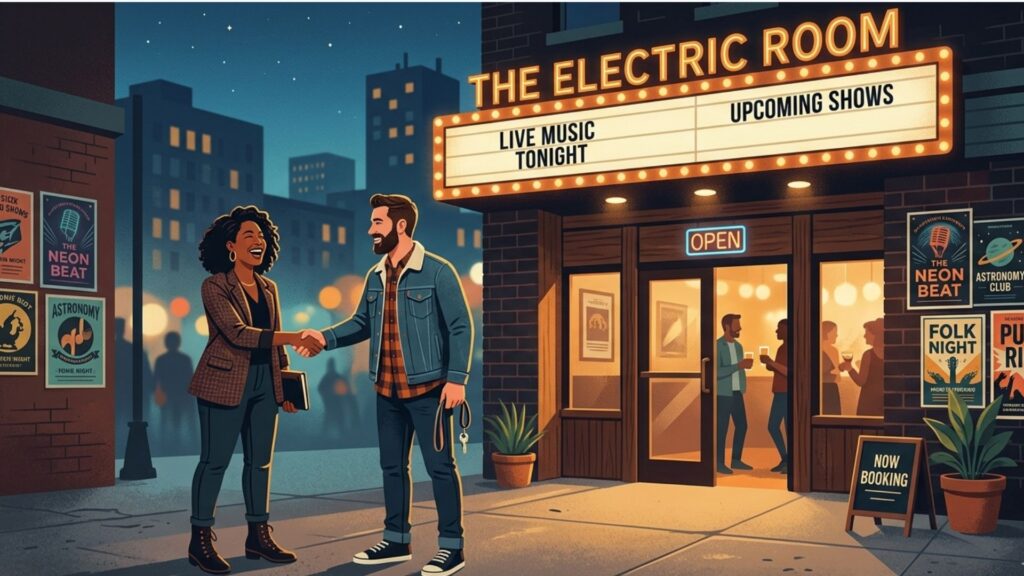
Bands need reliable options they can return to again and again. Finding venues where an artist can perform on a recurring basis creates stability that benefits everyone. Artists refine their live show, achieve financial predictability, and build local fan bases that spread through word of mouth. Agencies that develop these venue relationships create recurring value for their entire roster.
To build those connections, you must invest time in understanding what talent buyers actually need and position your artists accordingly. The agents who thrive maintain ongoing dialogue with venue contacts even when they’re not actively booking.
Build Compelling Electronic Press Kits
Press kits are essential tools for showcasing artists professionally. While social media presence matters, a well-constructed EPK tells the story of your client in a format talent buyers expect and can quickly evaluate. Effective press kits demonstrate that you understand current market positioning and can articulate what makes your artist worth booking.
Include streaming numbers, notable press coverage, live performance footage, and clear contact information. The goal is to make it easy for a talent buyer to say yes.
Set Realistic Expectations
Bold promises you can’t deliver destroy credibility faster than anything else. Artists often arrive with ambitious visions, and part of your value lies in channeling that energy toward achievable milestones. You need delicate communication skills and an honest assessment of where an artist currently stands in their development.
Setting realistic expectations doesn’t mean dampening ambition. It means establishing concrete steps that build toward larger goals while maintaining trust throughout the process.
Develop Deep Networking Habits
Live music is a relationship business. Conferences, venue visits, and consistent outreach create the contact network that makes booking possible. You never know which relationship will open unexpected doors for your roster.
Build systems for maintaining these connections even during busy periods. Regular check-ins, industry event attendance, and social media engagement keep you visible. Booking strategies for talent buyers work both ways: the more you understand their world, the better you can serve your artists.
Implement Modern Booking Systems
Agents who seem to operate everywhere while staying current on trends have one thing in common: efficient systems that eliminate administrative burden. Most successful agencies now use management platforms that automate routine tasks and reduce human error.
The right technology frees time for relationship building and artist development while ensuring nothing falls through the cracks. Artist management software handles calendar coordination, contract generation, settlement calculations, and financial tracking in unified systems accessible from any device.
Find Creative Performance Opportunities
Artists don’t always know what stage fits them best. Innovative agents look beyond obvious venues to find audiences in unexpected places. Local fairs, charity fundraisers, private events, and cross-promotional opportunities can all serve as launching pads.
The key is matching artist energy with audience expectations. A successful gig in an unconventional setting can generate momentum that traditional bookings miss entirely.
How Do Modern Agencies Use Data to Improve Artist Representation Strategies?
The agencies pulling ahead in 2026 treat data like a competitive weapon. Streaming analytics, social engagement metrics, and venue performance history inform every decision from artist acquisition to tour routing.

Leverage Streaming and Social Analytics
Platforms like Spotify and TikTok generate real-time data about artists’ trajectories. Agencies that monitor these signals identify emerging talent before competitors and track which markets show the strongest engagement for existing roster members. This intelligence shapes how to structure deals and which opportunities to pursue.
Track Performance History
Understanding what artists have grossed in similar venues provides leverage during negotiations. It informs pricing decisions and helps predict ticket sales before committing to guarantees. Talent buying software can automatically aggregate this data, giving agents real-time access to information that would otherwise require hours of research.
Identify Market Patterns
Regional preferences, seasonal trends, and venue capacity sweet spots all reveal themselves through consistent data analysis. Agencies that recognize these patterns route tours more efficiently and identify opportunities others miss.
What Role Does Technology Play in Music Agent Best Practices?
As more than half a billion dollars were poured into new U.S. arenas and theaters, the opportunities for your artists are expanding. But manual processes create risk. When you’re managing dozens of shows across multiple artists, small mistakes become double-booked venues, missed payment deadlines, settlement errors, and buried contract details. Agencies that implement dedicated booking software consistently report time savings and reduced errors, which directly translate into improved profitability.
Modern booking agent software handles the complexity that used to require multiple staff members. Calendar management, hold tracking, offer templates, settlement calculations, and financial reporting all integrate into unified platforms. Agents can focus on relationships and deals.
The agencies resisting technology adoption face a simple math problem. Their overhead grows with their roster while tech-enabled competitors scale efficiently. Eventually, the efficiency gap becomes unsustainable.
How Should Agencies Maintain Honest Communication With Artists?
Artists often struggle with objectivity about their own work. They’re so invested in their musical vision that an outside perspective becomes invaluable. Good booking agents provide this objectivity as part of their value proposition.
If an act needs tighter transitions to improve the fan experience, say so. If a band isn’t ready for the venues they’re targeting, help them understand the path forward. Tactful honesty strengthens relationships and accelerates artist development.
Objectivity also helps agencies evaluate potential roster additions. Not every talented artist is ready for professional representation. Most agents can’t afford to take on clients who require more development time than available resources allow. There’s nothing wrong with telling a band you appreciate their work but aren’t positioned to represent them yet.
When you do believe in an emerging artist’s potential, honest feedback is even more critical. The talent will usually emerge, but only when artists receive and act on constructive input about their live show, branding, and career positioning.
7 Essential Practices for Booking Agency Success
These booking agency best practices form the foundation that separates agencies building momentum from those constantly playing catch-up.
- Specialize before expanding – Master one genre or market before diversifying
- Document everything – Use systems that create paper trails for every deal
- Communicate proactively – Never let partners hear about problems secondhand
- Build recurring relationships – Prioritize venues and promoters who book repeatedly
- Invest in technology – Automate administrative tasks to focus on relationships
- Stay current on market data – Monitor streaming trends, venue openings, and industry shifts
- Maintain work-life boundaries – Burnout serves nobody; sustainable practices preserve careers
Agencies that internalize these principles create the consistency and reliability that artists, venues, and promoters actively seek out.
FAQ
What percentage do booking agents typically charge? Most booking agents charge commissions between 10% and 20% of artist fees. Rates vary based on agent experience, artist career stage, and deal complexity. Some agencies charge higher percentages for emerging artists who require more development work.
How do I know if my agency is ready to scale? Key indicators include consistent deal flow, stable roster relationships, reliable operational systems, and demand that exceeds current capacity. Before scaling, audit your processes for efficiency and ensure your technology can support increased volume.
What’s the difference between a booking agent and a manager? Booking agents focus specifically on securing live performance opportunities and negotiating show terms. Managers handle broader career strategy, including recording contracts, brand partnerships, and overall business development. Many artists work with both simultaneously.
How important is genre specialization for booking agencies? Genre specialization accelerates reputation building by concentrating expertise and relationships. Agencies known for specific sounds attract artists seeking that credibility and develop deeper venue relationships within their niche. Expansion into additional genres becomes easier once core specialization is established.
Take Your Booking Agency to the Next Level
The live music industry continues setting revenue records, with venues packed and fans willing to pay premium prices for memorable experiences. Booking agencies face a tremendous opportunity to improve operations and develop stronger artist representation strategies.
Success requires combining relationship fundamentals with modern systems that eliminate friction. The agencies thriving today build from independent operations to scaled businesses by implementing booking agency best practices.
Prism offers an all-in-one live music management platform designed specifically for booking agencies, promoters, and venues. From holds to settlements, our software replaces disconnected systems with unified operations accessible from any device. Get started today to experience what purpose-built music industry technology can do for your agency.

Matt Ford is the founder and CEO of Prism.fm, a platform built to help the live music industry operate with more clarity and confidence. After 15+ years running venues, producing festivals, and promoting shows, Matt saw firsthand how much of the business relied on fragmented tools and guesswork. He founded Prism in 2018 to change that.
Today, Prism powers more than 3,000 venues and 330 organizations nationwide, serving as an all-in-one platform designed to streamline operations by replacing cumbersome spreadsheets with integrated tools for booking, financial tracking, and contract management. Matt has also led the development of Insights, Prism’s demand prediction platform, which uses real, verified ticketing data to help teams better understand artist performance and make smarter decisions before committing to a show.
Related Post

The Role of Artist Booking Agencies in the Music Industry
With the glamor, bright lights, and pulsating beats that come with seeing popular artists live on stage, it’s easy to overlook the intricacies that enable such thrilling experiences. At the heart of this system is…

How to Build Powerful Connections Between Artists, Venues, and Other Agencies
The music industry has never been more valuable, and yet many live-concert venues are struggling to find a lane in a complicated post-pandemic world. Even with more opportunities than ever to connect musicians with fans,…

How to Structure Deals with Artists for Your Agency
Finding the sweet spot between event promotion expenses and revenue from ticket sales is the secret to generating a profit as an agency. The COVID-19 epidemic virtually affected all four corners of the world. The…