
Beyond the Announcement: What Actually Drives Successful Live Event Marketing?
For live event marketers, getting the word out is only part of the job. Between coordinating announcements, managing campaigns, tracking ticket sales, and keeping up with a packed event calendar, it’s easy to spend the entire day executing marketing tasks without having much time to think about the strategy behind them.
But the most successful live event marketing strategies aren’t necessarily the ones with the most emails, social posts, or advertising dollars behind them. They’re the ones that use data, timing, and creativity to reach the right audience with the right message.
On a recent episode of the Live Music Industry Podcast, Prism CEO Matt Ford sat down with Geoff Shames, Co-Founder and Operating Partner at Crowd Control Digital, to explore what separates great live event marketers from the rest.
Drawing on more than two decades of experience marketing artists, venues, festivals, and entertainment brands, Shames shared his perspective on ticket-buying behavior, campaign strategy, marketing automation, and the growing role of AI.
Here are some of the biggest takeaways for anyone looking to build a more effective approach to marketing live events.
1. Stop Checking Boxes. Start Making Data-Driven Marketing Decisions.
Most event marketers know the routine. Announce the show, schedule the emails, launch the ads, post to social media, and repeat.
Those activities are important, but completing them doesn’t necessarily mean a campaign is performing well.
As Shames explained, the strongest marketers take a more analytical approach to their work.
“How deep are you going into your own performance versus being performative?”
Instead of simply following the same promotional calendar for every event, successful marketers look closely at historical performance to understand what’s actually working.
That means asking questions like:
- Which days and times consistently generate the strongest engagement?
- What types of content lead to meaningful audience responses?
- How do ticket sales typically progress from announcement to show date?
- Which marketing channels perform best for different artists, genres, or markets?
- How does the current event compare to similar past shows?
Shames noted that when his agency begins working with a new client, there’s often a noticeable difference in how organizations approach their data. Some provide little more than an email list. Others arrive with detailed historical ticket sales, normalized by the number of days remaining before each event.
That level of visibility creates opportunities to make more informed decisions throughout the campaign.
The takeaway: Effective event marketing starts with understanding what has worked before, measuring what’s happening now, and using that information to guide what happens next.
2. Understand When Your Audience Actually Buys Tickets
One of the biggest challenges in concert marketing is that ticket-buying behavior isn’t consistent across events.
Some shows generate significant demand immediately after going on sale. Others experience an early burst of sales, followed by a slower period and a surge in purchases during the final days before the event.
Understanding these patterns can dramatically change how marketers approach campaign timing and spending.
During the conversation, Shames recalled working with an electronic music venue outside Detroit where ticket sales regularly accelerated in the final 36 hours before a show.
Without that historical context, low advance sales could easily trigger unnecessary concern or an aggressive last-minute advertising push.
But when late purchasing is an established pattern, the strategy should account for it.
That doesn’t mean marketers should simply wait for ticket buyers to show up.
Shames described the opportunity to improve sales during the slower middle portion of a campaign. Even a modest increase in daily ticket sales can create a meaningful difference by showtime.
Match Your Marketing Strategy to the Sales Cycle
A more strategic approach to event ticket sales might include:
At announcement and on-sale: Focus on reaching the most engaged fans and capturing early demand.
During the middle of the campaign: Maintain awareness, introduce the event to new audiences, and test creative approaches that can generate additional interest.
As the event approaches: Increase urgency and target audiences whose purchasing behavior suggests they’re more likely to convert closer to showtime.
The goal isn’t necessarily to force every audience to buy earlier. It’s to understand when they’re likely to buy and allocate marketing resources accordingly.
3. There’s No Universal Playbook for Selling More Tickets
It’s tempting to apply the same marketing formula to every show.
Launch a Meta campaign. Send an email. Post a few videos. Increase the budget if sales slow down.
But Shames emphasized that effective live event marketing requires a much more nuanced approach.
Everything from the artist’s genre and the venue’s capacity to the local economy, competing events, and even the time of year can influence demand.
The audience matters just as much.
Where do potential ticket buyers spend their time online? What other artists do they follow? What kind of creative catches their attention? What motivates them to attend a live event?
The answers won’t be identical for every show.
A campaign targeting electronic music fans in one city may require a completely different approach than a campaign promoting a performing arts event in another market.
And even within the same venue, different audiences may respond to different channels, messages, and promotional timelines.
Build Repeatable Systems Without Relying on Identical Campaigns
The solution isn’t to abandon marketing playbooks altogether.
Instead, organizations need repeatable systems that make campaign execution easier while leaving room to adapt their strategies to each event.
That could mean standardized campaign workflows, centralized marketing calendars, and consistent reporting processes, paired with event-specific decisions about audience targeting, creative, and timing.
The best marketing operations combine structure with flexibility.
4. Great Event Marketing Can Create Demand, Not Just Capture It
There’s a fundamental question at the center of live event marketing: Can marketing convince someone to attend an event they weren’t already planning to see?
Shames believes it can.
His explanation comes down to creating an experience people don’t want to miss.
During the podcast, he shared his experience attending the Backstreet Boys at Sphere in Las Vegas. He wasn’t a particularly devoted fan, but after repeatedly hearing how impressive the production was, he decided to go.
The event itself became the attraction.
For marketers, that distinction is important.
Promoting an artist’s name, date, and venue tells audiences that an event exists. Showing people why the experience is worth attending gives them a reason to care.
Turn the Live Experience Into Your Most Compelling Marketing Asset
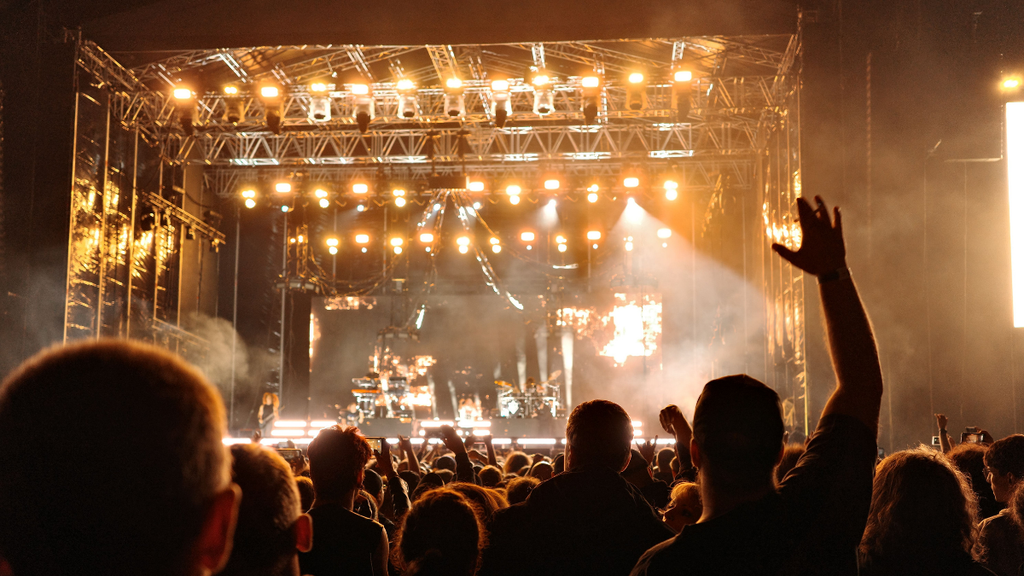
One tactic Shames highlighted was using authentic fan-shot concert footage in promotional campaigns.
Rather than relying exclusively on polished graphics and traditional advertisements, marketers can show prospective attendees what it actually feels like to be in the crowd.
That might include:
- Fan-shot videos capturing the energy of a performance
- Audience reactions and memorable moments from previous shows
- Behind-the-scenes content that builds anticipation
- Creative partnerships with local communities or influencers
- Experiential activations that encourage attendees to share their experiences
This kind of content helps potential buyers picture themselves at the event.
And when fans share those experiences with their own networks, the marketing extends beyond the original campaign.
The opportunity isn’t just to advertise the event. It’s to make attending feel like an experience worth talking about.
5. Use AI and Automation to Make More Room for Strategy
For many venue and event marketing teams, the biggest obstacle to more creative campaigns isn’t a lack of ideas.
It’s a lack of time.
Marketers are responsible for managing dozens of overlapping tasks, often across multiple events with different deadlines, audiences, and sales trajectories.
When most of the workday is consumed by execution, strategic thinking becomes difficult.
This is where Shames sees significant potential for AI in live event marketing.
Rather than focusing exclusively on AI-generated creative, he’s particularly interested in its ability to support research, data analysis, and repetitive workflows.
For example, AI-assisted processes can help marketers:
- Analyze historical campaign performance and identify patterns
- Research how similar events have been marketed
- Monitor multiple data sources for changes that deserve attention
- Draft routine marketing communications for review
- Identify opportunities to adjust campaigns based on ticket sales trends
These applications can help teams spend less time collecting information and more time deciding what to do with it.
From Reactive Marketing to Proactive Decisions
Consider a venue managing dozens of upcoming shows.
Without centralized data and automated monitoring, identifying an underperforming event may require manually reviewing ticket counts, comparing spreadsheets, and investigating historical performance.
With better systems in place, teams can recognize concerning trends earlier and evaluate potential responses before the event reaches a critical point.
The objective isn’t to remove human judgment from the process.
It’s to give marketers the information and time they need to make better decisions.
As Shames discussed, the future of AI in marketing could be less about replacing creative thinking and more about making it possible again.
6. Think Beyond the Next Show
Another important distinction emerged when Ford and Shames discussed why established festivals continue investing heavily in marketing even when they have a history of selling out.
If demand is already strong, why keep spending money to promote the event?
Because marketing isn’t always about immediate ticket sales.
It’s also about building a brand that audiences recognize, trust, and want to be associated with.
For festivals and venues, that long-term brand equity can help sustain interest across multiple seasons, support sponsorship opportunities, and reinforce the event’s place in a competitive market.
A sold-out event is a short-term success. A recognizable, consistently desirable event brand creates opportunities for future success.
That means event marketers need to balance performance marketing with longer-term audience development.
Not every campaign should be judged solely by the tickets it sells today.
Some campaigns are building the awareness, engagement, and anticipation that will influence purchasing decisions months or even years down the road.
The Future of Live Event Marketing Is Smarter, More Creative, and More Connected
If there’s one theme that connects Shames’ insights, it’s that better marketing doesn’t necessarily mean more marketing activity.
It means making more intentional decisions.
The strongest live event marketers understand their audiences, recognize ticket-buying patterns, use historical data to guide their strategies, and build systems that free them to think creatively.
And as AI and automation become more integrated into everyday workflows, the opportunity to do all of those things more effectively will continue to grow.
For venues, promoters, and live event organizations, the challenge is to move beyond simply keeping campaigns running and start asking more strategic questions.
Are we reaching the right audience? Are we investing at the right time? Are we learning from our past events? And are we creating experiences people genuinely want to attend?
Because ultimately, successful live event marketing isn’t about checking every box.
It’s about knowing which actions will make the biggest difference.
Hear the Full Conversation
Want to hear more from Geoff Shames about live event marketing strategies, ticket sales trends, and how AI is changing the industry?
Listen to his conversation with Matt Ford on the Live Music Industry Podcast for more insights into the future of marketing live events.

Matt Ford is the founder and CEO of Prism.fm, a platform built to help the live music industry operate with more clarity and confidence. After 15+ years running venues, producing festivals, and promoting shows, Matt saw firsthand how much of the business relied on fragmented tools and guesswork. He founded Prism in 2018 to change that.
Today, Prism powers more than 3,000 venues and 330 organizations nationwide, serving as an all-in-one platform designed to streamline operations by replacing cumbersome spreadsheets with integrated tools for booking, financial tracking, and contract management. Matt has also led the development of Insights, Prism’s demand prediction platform, which uses real, verified ticketing data to help teams better understand artist performance and make smarter decisions before committing to a show.
Related Post

Concert Marketing Software: Your 2026 Guide to Selling Out Shows
The right software has moved from a nice-to-have to the operating system of a modern promotion campaign, connecting your marketing plan directly to ticket sales and the bottom line. If you’re still running campaigns out…

Common Mistakes Promoters Make Without the Right Tools
Music promoter workflow inefficiencies cost the industry millions annually through missed opportunities and manual errors. Key issues include: Modern live event logistics platforms eliminate these bottlenecks and streamline operations. The live music industry is booming.…
Future of Concert Event Management: Trends for 2025–26
The live music industry is experiencing unprecedented growth, but the game has fundamentally changed. Running concerts the same way you did five years ago is like trying to book shows with a flip phone. The…