
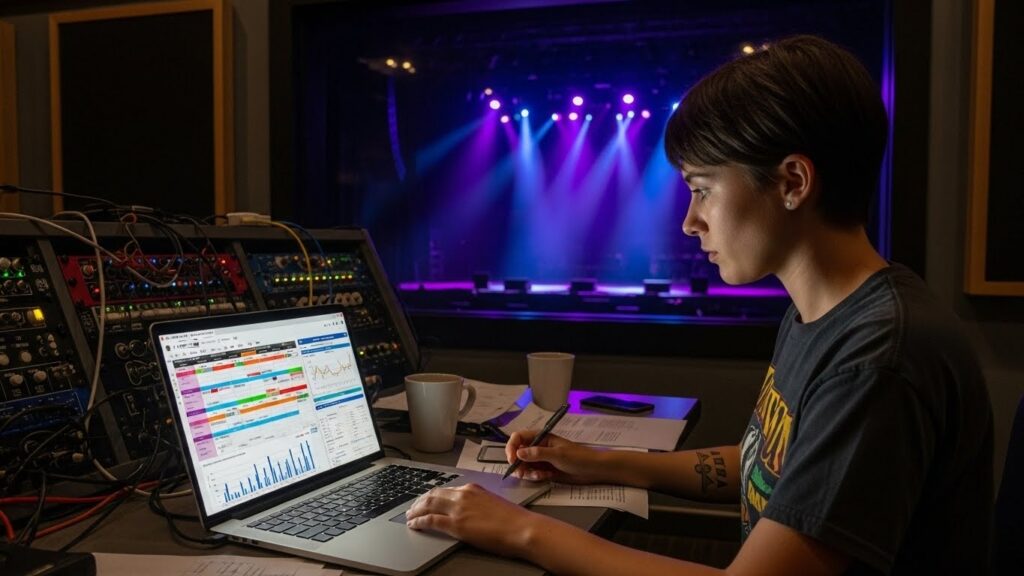
How Venue Management Software Can Automate Scheduling & Reporting
Venue management software eliminates the chaos of spreadsheets and manual processes that drain live music operators of time and money.
- Automated scheduling prevents double-bookings and surfaces optimal booking opportunities across multiple rooms and calendars.
- Real-time financial reporting replaces manual data entry with integrated dashboards that update as tickets sell.
- Settlement automation cuts hours off post-show reconciliation while reducing costly calculation errors.
The venues pulling ahead are treating technology as an operational advantage rather than an afterthought.
Live music venues are booking more shows than ever, but the operational backend often looks like it’s stuck in 2005. Phone calls, handwritten notes, scattered spreadsheets, and email chains that require archaeological expeditions to decipher. The live music industry generated over $38 billion globally in 2025, yet many venue operators are struggling with unprecedented challenges that technology solved years ago. The gap between what’s possible and what’s actually happening on the ground is both a problem and a massive opportunity.
Live music management demands a different approach than general event planning. When a tour manager needs availability confirmed within the hour or an agent wants to know your historical performance data for a specific genre, you can’t be digging through filing cabinets or cross-referencing three different systems. Venue management software built for music venues addresses these exact pain points by automating the repetitive tasks that eat up your day while surfacing the insights you need to make smarter booking decisions.
Why Does Venue Management Software Matter?
Venue management software centralizes and automates the tasks involved in running a live music venue. It manages everything from managing holds and offers to tracking financials, coordinating with agents, generating reports, and settling shows. For venue operators juggling multiple rooms, hundreds of bookings per year, and relationships with dozens of agents and promoters, the right platform becomes the operational backbone of the entire business.
What’s the difference between general event software and purpose-built venue management software? Generic platforms treat a corporate conference and a sold-out rock show the same way, missing the nuances that define live music workflows. Holds versus confirms, percentage deals versus guarantees, co-promotion splits, radius clause tracking, and real-time break-even calculations are all foreign concepts to platforms designed for weddings and corporate retreats.
What separates high-performing venues from those constantly putting out fires often comes down to their tech stack. Operators using integrated systems can respond faster, book smarter, and spot problems before they become expensive. Those relying on disconnected tools spend their days playing catch-up instead of building the relationships that actually drive revenue.
How Does Automation Transform Venue Scheduling?
The scheduling challenges facing venues have intensified as the industry rebounds. Shorter booking windows, more complex production requirements, and heightened artist expectations mean talent buyers can’t afford the friction of manual processes. Automation handles the mundane tasks while freeing up music pros to focus on relationship building and creative problem-solving.
Preventing Double-Bookings Before They Happen
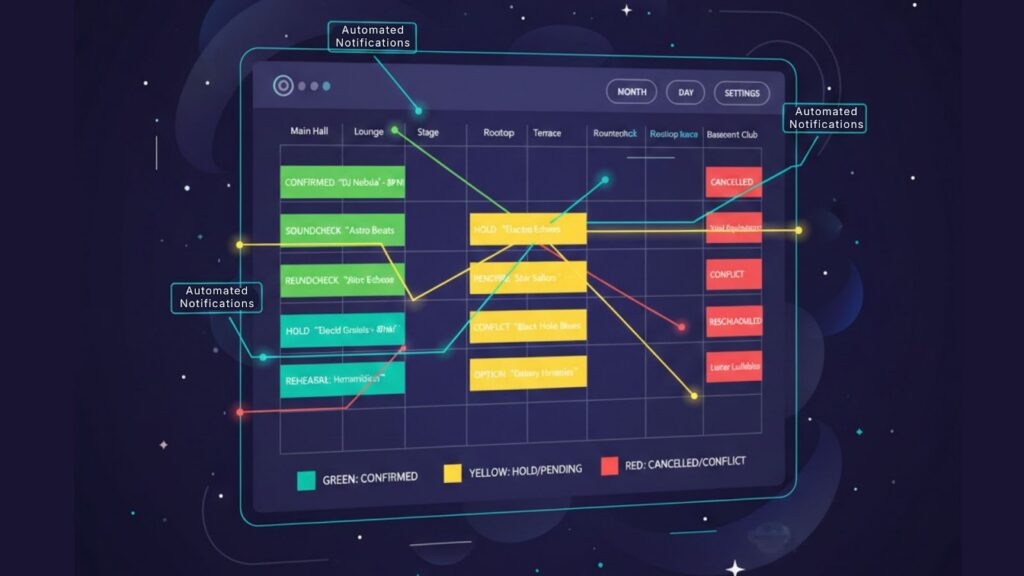
Traditional scheduling requires manually cross-referencing calendars, emails, and phone notes to confirm availability. One miscommunication can result in two artists showing up expecting to headline the same night. Automated venue operation software eliminates this risk by maintaining a single source of truth that updates as holds are placed, released, or converted to confirms.
Modern systems go beyond calendar blocking. They track first and second holds across multiple rooms, automatically notify relevant parties when availability changes, and flag potential conflicts like radius clause violations before you’ve committed to anything. The transparent scheduling process that updates in real time has become a hallmark of professional venue operations.
Surfacing Booking Opportunities
Smart scheduling platforms analyze your historical data to identify patterns you might miss. Which nights consistently underperform? Which genres draw strongest in your market? Which agents consistently deliver? Instead of relying solely on gut instinct, venue managers can combine intuition with data to make more informed decisions about which shows to pursue and when to schedule them.
For talent buyers managing relationships with multiple agents, AI-powered systems can analyze available dates across your venue portfolio and suggest optimal routing that maximizes booking density while minimizing dark nights. Intelligent scheduling is impossible with manual processes and offers a genuine competitive advantage for venues that embrace it.
Streamlining Communication with Agents
Venue scheduling inherently involves multiple stakeholders: agents, managers, promoters, and production teams. Keeping everyone aligned requires constant communication that can quickly overwhelm inbox-based workflows. Automated systems handle routine follow-ups, generate standardized offer templates, and maintain a clear record of every conversation and decision.
When an agent asks about a hold they placed six weeks ago, you shouldn’t need to dig through email threads to piece together the status. The right venue promoter management platform instantly surfaces this information, maintaining your professional reputation while saving hours.
What’s the Reporting Advantage for Venue Promoter Management?
Financial visibility separates venues that thrive from those that merely survive. Knowing your numbers in real time enables proactive decision-making rather than reactive scrambling. When venue management software integrates with your ticketing platform, every ticket sale automatically updates your financials without manual data entry.
The demand for these capabilities is driving industry growth. The global event management software market is expected to reach $17.33 billion by 2030, growing at a CAGR of 13.2% from 2025 to 2030. This surge reflects how seriously operators are taking the need for automated, data-driven operations.
Real-Time Financial Dashboards
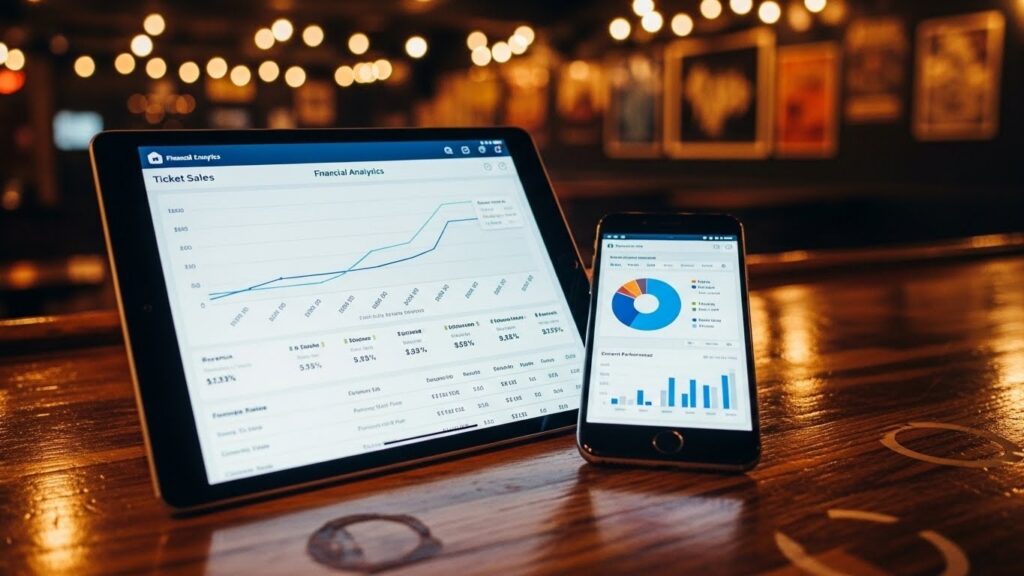
The days of waiting for weekly sales reports from your ticketing provider are over. Integrated live music management software shows you exactly how every gig is tracking against projections, giving you time to adjust marketing strategies, shift rooms, or modify promotional efforts while there’s still runway to impact outcomes.
Real-time dashboards transform how venues manage financial documentation before, during, and after shows. Revenues, invoices, and costs become immediately accessible, enabling faster and more confident decision-making. If a show isn’t selling as quickly as anticipated, you have time to rethink marketing strategies, push out more social content, or explore room changes before it’s too late.
Simplified Settlement Processes
Show settlement typically involves pulling data from multiple sources, reconciling ticket counts, calculating artist payments, accounting for expenses, and generating final reports. Manual settlement is tedious, error-prone, and often delays payments that affect your relationships with artists and agents.
Automated settlement streamlines this entire process. Expenses flow directly from your tracking system, ticket counts pull automatically from integrated platforms, and deal terms are already stored from the booking phase. What used to take hours can happen in minutes, with fewer errors and cleaner documentation.
Historical Performance Analytics
Beyond individual show tracking, accumulated data becomes a strategic asset. Venue booking software that maintains comprehensive records enables you to identify which deal structures perform best, which booking sources deliver the most profitable shows, and how different factors affect your bottom line over time.
This historical context proves invaluable during booking negotiations. When an agent proposes a guarantee that feels aggressive, you can reference comparable shows to validate or challenge the number with actual data rather than approximations.
Which Features Should Every Venue Operation Software Include?
To pick the right platform, you have to understand which features actually move the needle for live music. While general event software might check basic boxes, music-specific requirements demand specialized functionality.
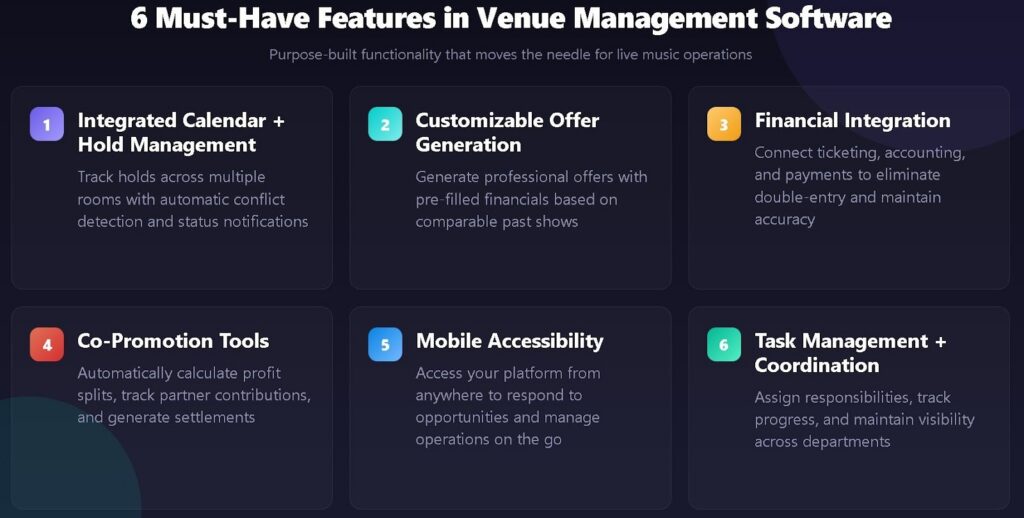
Integrated Calendar with Hold Management: Your calendar needs to track holds at various levels, prevent conflicts, and provide instant visibility into availability across multiple rooms or venues. Look for systems that automate hold tracking and notify relevant parties when statuses change.
Customizable Offer Generation: Building offers manually requires pulling data from multiple sources and formatting everything into presentable documents. Modern venue booking software generates professional offers with pre-filled financial projections based on comparable past shows, reducing what used to take an hour to just minutes.
Financial Integration Capabilities: The most valuable platforms connect directly with ticketing systems, accounting software, and payment processors. These integrations eliminate double-entry while maintaining accuracy across your entire financial ecosystem.
Co-Promotion Management Tools: Co-promotion deals are increasingly common, requiring complex profit splits, partner tracking, and shared settlement documentation. Purpose-built platforms automatically handle these calculations, tracking each partner’s contribution and generating settlement reports for multiple parties without spreadsheet gymnastics.
Mobile Accessibility: Live music doesn’t happen from behind a desk. The ability to access your platform from anywhere means you can respond to opportunities, check availability, and approve contracts whether you’re backstage, at a conference, or anywhere else the industry takes you.
Task Management and Team Coordination: Assigning responsibilities, tracking progress, and ensuring accountability across departments requires more than email chains. Integrated task management keeps everyone aligned on deadlines while providing visibility into what’s done, what’s pending, and what’s falling behind.

How Does the Right Venue Booking Software Pay for Itself?
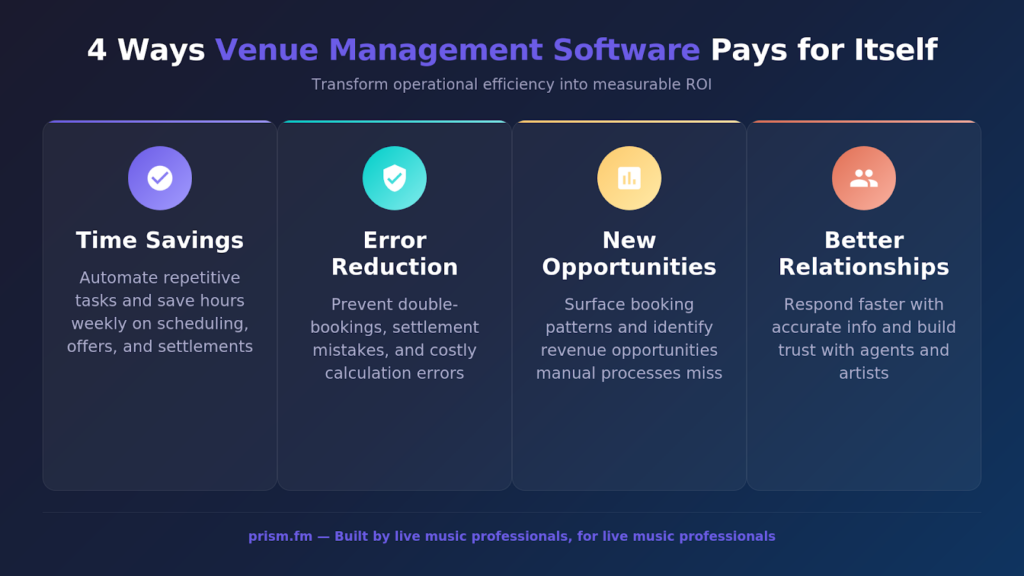
The investment in proper venue management software often concerns operators already working with thin margins. However, the return on investment typically manifests in multiple ways that compound over time.
Time savings is the most immediate benefit. Tasks that previously consumed hours happen automatically, freeing up your team to focus on building relationships and exploring new booking opportunities. When 54% of professionals believe they could save at least four hours weekly with automated tools, the math becomes compelling.
Error reduction translates directly to financial savings. Double-bookings damage relationships and reputation. Settlement mistakes create disputes and potential legal issues. Inaccurate financial tracking leads to poor decision-making. Each prevented error represents value that accumulates throughout your operation.
Platforms that surface insights about your booking patterns, highlight underperforming nights, or identify trending artists in your market create revenue opportunities that manual processes miss. The show you book because the system flagged an opportunity pays for months of software subscription.
Better relationships with agents and artists emerge when you operate professionally and responsively. Agents notice which venues respond quickly with accurate information and which require multiple follow-ups to get basic details confirmed. Your reputation in the industry affects which opportunities come your way, and efficient operations contribute to that reputation.
FAQ
How much time can venue management software actually save? Operators report saving hours weekly on tasks like scheduling coordination, offer generation, and settlement preparation. For venues booking 200+ shows annually, those efficiency gains add up to thousands of hours redirected toward revenue-generating activities instead of administrative overhead.
Can venue management software integrate with my existing ticketing platform? Purpose-built platforms for live music typically integrate with major ticketing providers, automatically syncing ticket sales data with your financial tracking. This integration eliminates manual data entry while providing real-time visibility into how shows are performing against projections.
What’s the difference between general event software and venue-specific platforms? General event software treats all events the same, missing music-industry specifics like holds versus confirms, co-promotion calculations, percentage deals, radius clause tracking, and settlement workflows. Venue-specific platforms understand these unique requirements and build workflows around how live music actually operates.
How does automated reporting improve decision-making? Real-time financial dashboards show exactly how each show is tracking, enabling proactive adjustments to marketing, room configurations, or pricing while there’s still time to impact outcomes. Historical analytics reveal patterns about what works in your market, informing smarter booking decisions over time.
Make Your Venue Work Smarter
The winning venue operators have stopped treating operational technology as an optional expense and started viewing it as a strategic advantage. Every hour spent on tasks that software could automate is an hour not spent building the relationships, pursuing the opportunities, and delivering the experiences that actually drive success.
The transition from manual processes to automated platforms doesn’t require a complete operational overhaul overnight. Start by identifying your biggest pain points, whether that’s scheduling conflicts, settlement headaches, or financial visibility gaps. Then evaluate platforms specifically designed for live music venues, not generic event software retrofitted for an industry it doesn’t understand.
Prism was built by live music industry professionals who’ve experienced these challenges firsthand. Our platform brings together scheduling, financial tracking, settlement automation, and reporting into a single system designed for how venues and promoters actually work. Get started with Prism today and see what efficient venue management actually looks like.

Matt Ford is the founder and CEO of Prism.fm, an Austin-based software company revolutionizing live music event management. With a background in entrepreneurship and a degree from the University of Wisconsin-Madison School of Business, Ford combined his self-taught coding skills with firsthand experience as a concert promoter to address the inefficiencies he observed in the industry. In 2018, he launched Prism.fm, an all-in-one platform designed to streamline operations for venues, promoters, and agencies by replacing cumbersome spreadsheets with integrated tools for booking, financial tracking, and contract management. Under his leadership, Prism.fm has grown significantly, achieving $3 million in annual recurring revenue post-COVID and securing over $15 million in funding . Ford’s commitment to building user-centric solutions has positioned Prism.fm as a trusted partner for over 1,500 venues and promoters worldwide.
Related Post
Real-Time Scheduling Software for Venues Explained
Venue owners are picking up real-time scheduling software to solve chronic operational headaches. Smart venue owners gain competitive advantages through integrated live venue software platforms. The live music industry moves at breakneck speed, but most…

Why Venue Management Software Is Replacing Spreadsheets
The spreadsheet era is over for serious venue operators. The shift from manual processes to automated platforms is essential for achieving a competitive advantage. The live music industry is experiencing a massive resurgence. With global…

How to Choose the Right Music Venue Booking Software
Modern music venues need sophisticated booking systems to compete in the industry. Choose specialized music venue software over enterprise solutions for better ROI and user experience. How is your music venue currently handling the booking…