

Why Agency Booking Software Needs Centralized Analytics Tools
The agencies winning in today’s live music market aren’t booking more shows. They’re booking smarter ones.
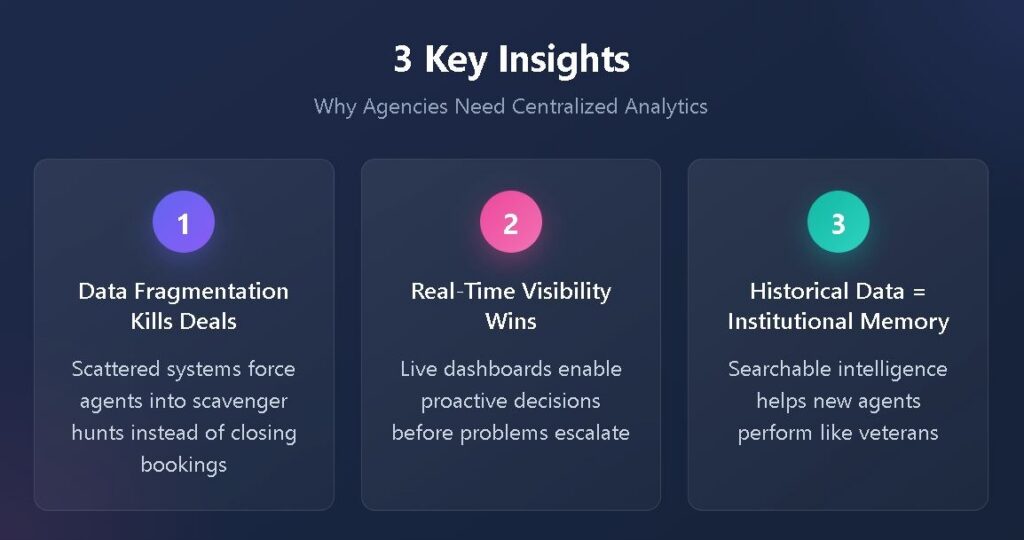
- Scattered data across spreadsheets, emails, and disconnected systems costs agencies thousands of hours annually in manual reconciliation.
- Centralized analytics enable real-time visibility into agent performance, deal pipelines, and revenue trends.
- 42% of music professionals engage with analytics daily, yet many still lack tools tailored to their specific workflows.
- Agencies that invest in purpose-built music agency software gain advantages through faster decision-making and improved client relationships.
If your agency is still making booking decisions based on gut instinct alone, you’re leaving money on the table.
The live music industry is on a tear. Global revenues hit nearly $39 billion in 2025, with projections showing an 8.78% compound annual growth rate through 2034. The agencies capturing the lion’s share of this growth aren’t necessarily the ones with the biggest rosters or the most experienced agents. They’ve figured out how to leverage agency booking software with centralized analytics and reporting to make smarter, faster decisions. Meanwhile, agencies still cobbling together insights from disconnected spreadsheets, email threads, and ticketing platform logins are hemorrhaging both time and opportunities.
What Does Agency Booking Software Actually Solve?
Before diving into analytics, let’s establish what modern agency booking software addresses. Traditional agency operations involve juggling artist calendars, managing holds and confirms across dozens of venues, tracking deposits and contracts, communicating with promoters, and settling shows. Historically, each of these workflows lived in separate systems or, worse, in individual agents’ heads.
Purpose-built music agency software consolidates these functions into a single platform. Every deal, every communication, every financial transaction flows through one hub. This consolidation alone saves agencies significant administrative overhead.
How Does Fragmented Data Cost Agencies Money?
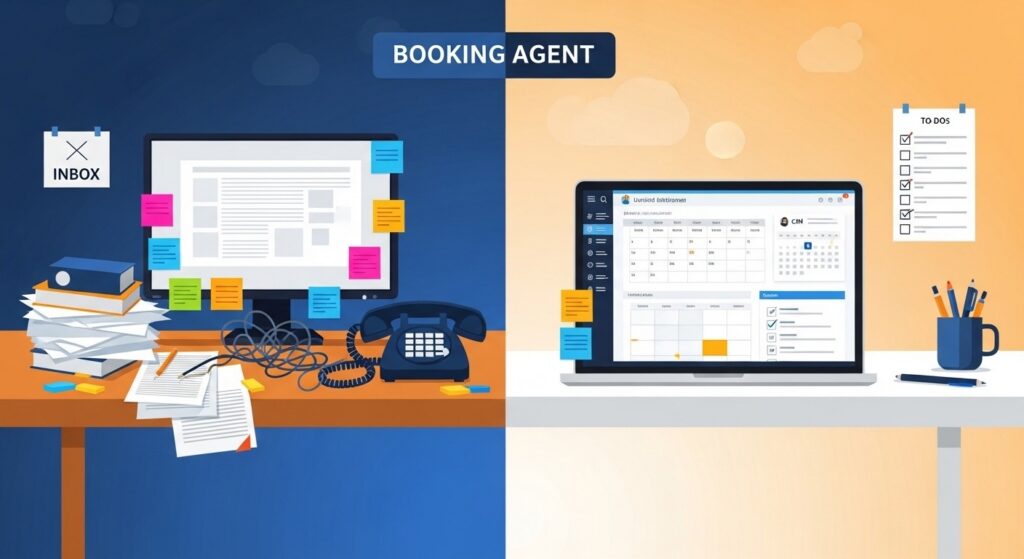
When your team spends hours each week hunting down information that should be instantly accessible, they’re not doing what you actually pay them for: building relationships and booking shows.
Consider the typical scenario when a promoter calls about availability for a routing opportunity. Without centralized systems, your agent might need to check the artist’s calendar (one platform), review recent ticket performance in that market (logging into a ticketing platform or requesting data from the venue), verify radius clause restrictions (digging through old contracts), and confirm financial terms from comparable shows (searching through emails or spreadsheets). What should be a five-minute conversation becomes a callback tomorrow.
In a business where relationships and responsiveness determine who gets the routing opportunities, that delay matters. Analytics for talent agencies should surface this information instantly, not after a scavenger hunt.
Why Is Centralized Reporting Essential for Agency Management Software?
Analytics without centralization is like having a speedometer in your glove compartment instead of on your dashboard. The information exists, but accessing it requires taking your eyes completely off the road. For agency management software to deliver real value, reporting capabilities need to be baked into the workflows agents already use daily.
Centralized reporting changes the nature of agency operations. Rather than reactive firefighting when problems become obvious, agencies gain proactive visibility into potential issues before they escalate. Is an artist’s ticket sales trending below projections three weeks out? The system flags it. Is a particular promoter consistently late on deposits? The pattern becomes visible across all their shows, not just the one your agent is currently frustrated about.
What Metrics Should Agencies Track?
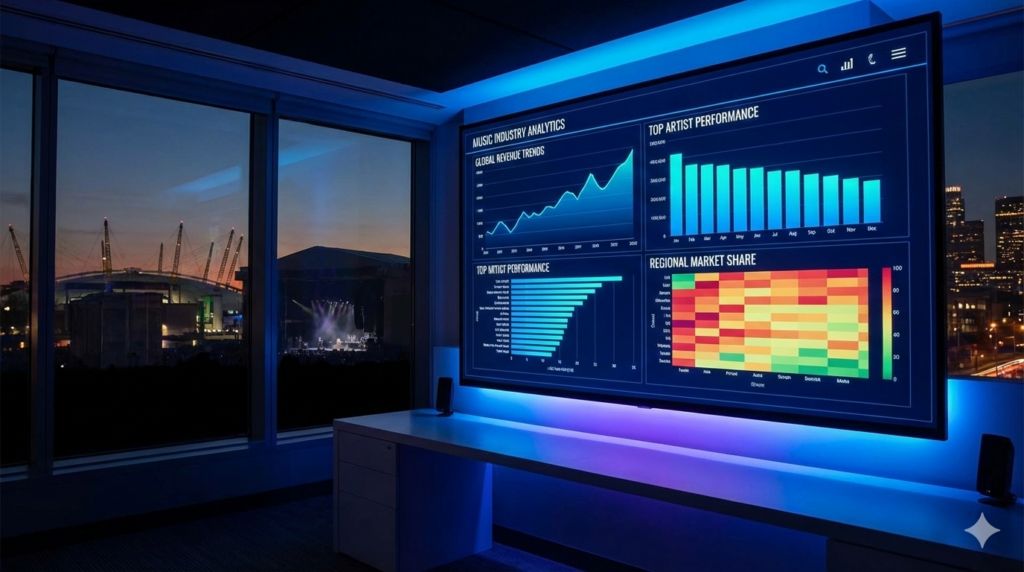
The specific KPIs vary by agency size and specialization, but certain metrics prove consistently valuable across the industry. Revenue by agent, artist, and venue type reveals where your business actually comes from. Deal pipeline velocity shows how efficiently opportunities convert from holds to confirmed shows. Average deal size trends indicate whether your agents are growing existing relationships or simply maintaining them.
Profitability metrics at the show level help identify which types of bookings actually make money after accounting for commission splits, travel costs, and settlement complications. Many agencies discover that their most glamorous bookings aren’t their most profitable ones. This insight only emerges when data flows into a unified system that can calculate true margins rather than just gross commissions.
How Do Analytics Transform Talent Agency Operations?
When agencies implement robust analytics capabilities, the entire culture shifts toward data-informed decision-making. Agents become more strategic about which opportunities to pursue. Instead of chasing every potential booking, they can quickly assess market conditions, historical performance, and profitability potential. This focus improves both close rates and average deal quality. Agency leadership gains visibility into operational health without micromanaging. Dashboards showing team activity, pipeline status, and financial projections replace endless status meetings. When everyone can see the same numbers, alignment happens naturally.
What Role Does Historical Data Play in Booking Decisions?
Historical data becomes your agency’s institutional memory. How did this artist perform at similar venues last year? What terms did you negotiate with this promoter for comparable acts? Which markets are oversaturated versus underserved for your roster’s genres?
These questions used to require either a veteran agent who remembered everything or hours of archaeological digging through old files. Modern music agency software makes this intelligence instantly searchable. New agents get up to speed faster. Experienced agents make better-informed pitches. Everyone benefits from accumulated organizational knowledge rather than starting from scratch with each booking.
What Features Distinguish Great Agency Booking Software?
When evaluating music agency software options, certain features separate genuinely useful tools from glorified digital filing cabinets.
Real-Time Dashboard Visibility
Static monthly reports arrive too late to inform active decisions. The best platforms provide live dashboards showing current deal pipelines, upcoming settlements, and performance trends as they develop. This immediacy enables course corrections rather than post-mortems.
Customizable Reporting Filters
Every agency operates differently. Your reporting needs depend on your roster composition, geographic focus, and business model. Software that forces you into one-size-fits-all reports limits usefulness. Look for platforms that let you slice data by agent, artist, venue type, region, time period, and custom tags relevant to your operation.
Integration with Ticketing Platforms
Manual data entry kills analytics accuracy. When your booking software automatically ingests ticket sales data from venue ticketing platforms, you get real-time performance visibility without trusting anyone to remember to update a spreadsheet. This integration also streamlines settlements by eliminating reconciliation headaches.
Settlement Tracking and Financial Reporting
Show profitability calculations require accurate settlement data. The best platforms track actual versus projected figures, flag discrepancies, and generate reports that make artist accounting straightforward. When financial data lives alongside booking data, agencies can analyze true profitability rather than just gross revenue.
5 Signs Your Agency Needs Better Analytics Tools
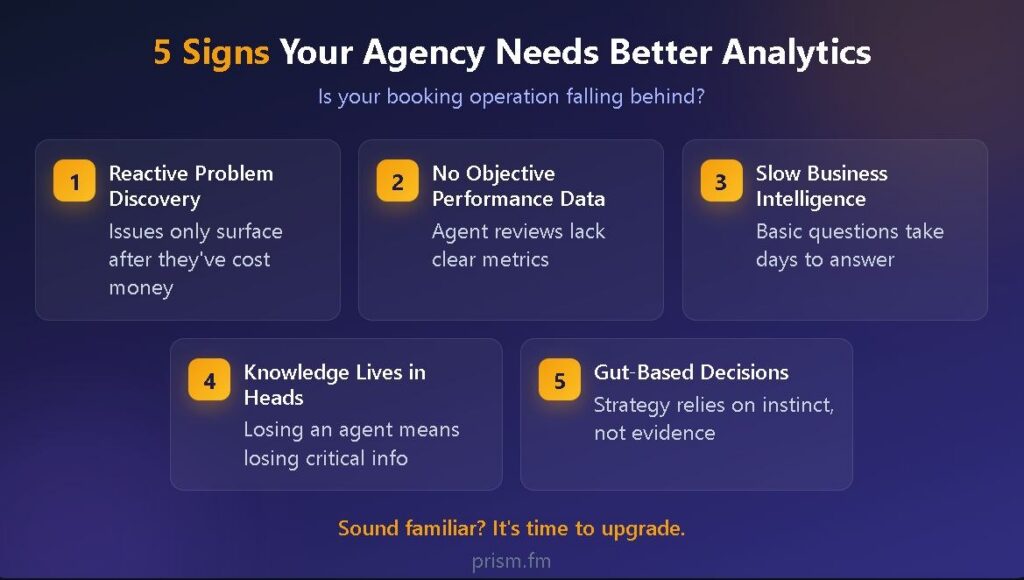
Recognizing the need for improved analytics often requires honest self-assessment. Here are indicators that your current approach is holding you back:
- You discover problems after they’ve already cost you money. If settlement discrepancies, missed deposits, or underperforming shows only surface during quarterly reviews, your visibility is insufficient.
- Agent performance conversations lack objective data. Without clear metrics, discussions about workload, productivity, and compensation become subjective and often contentious.
- You can’t quickly answer basic questions about your business. When a potential investor, partner, or acquirer asks about your revenue concentration, margin trends, or pipeline health, you shouldn’t need a week to compile an answer.
- Your best information lives in individual agents’ heads. If losing a key team member means losing crucial institutional knowledge, your data infrastructure is dangerously fragile.
- You’re making strategic decisions based on hunches rather than evidence. Which markets to expand into, which artist types to pursue, and which promoters deserve more attention are decisions that should be informed by data patterns, not just instinct.
How Can Agencies Implement Analytics Without Disrupting Operations?
Transitioning to centralized analytics for talent agencies doesn’t require ripping out every existing system overnight. The most successful implementations take an incremental approach. Start by consolidating deal tracking into a single platform. This step alone provides pipeline visibility while establishing data entry habits. Once that foundation is solid, layer in financial tracking and automated workflows.
Integration matters more than feature count. A platform that connects with your existing tools (calendars, email, ticketing systems) will gain adoption faster than one requiring complete workflow changes.
Training investment pays off. The best software delivers zero value if your team doesn’t use it consistently. Budget time for proper onboarding and ongoing reinforcement of data entry standards. Analytics quality directly correlates with input data quality.
What Does the Future Hold for Analytics in Talent Agencies?
The trajectory points toward increasingly sophisticated capabilities. Machine learning algorithms will eventually predict show performance with greater accuracy, recommend optimal pricing strategies, and identify emerging markets before they become obvious. Agencies embracing analytics platforms now will be positioned to leverage these advances as they mature.
Venues using data analytics have achieved up to a 30% increase in ticket sales through optimized booking and marketing decisions. Agencies that help their artists access these analytics-driven venues will deliver more value than those that can’t.

Frequently Asked Questions
What makes agency booking software different from general event management platforms?
Agency booking software is specifically designed for the unique workflows of talent agencies, including managing artist rosters, tracking holds versus confirms, calculating commissions, and handling promoter relationships. General event management platforms treat all events identically and often lack music-industry-specific features like radius clause tracking, deal memo generation, and settlement calculations.
How long does it typically take to implement centralized analytics for talent agencies?
Implementation timelines vary based on agency size and existing systems, but most agencies see meaningful analytics benefits within 30 to 60 days of adoption. The key factors affecting the timeline include data migration from existing systems, team training and adoption, and integration setup with ticketing platforms.
Can smaller agencies benefit from analytics tools, or are they only valuable for large operations?
Smaller agencies often see proportionally greater benefits from analytics. With leaner teams, the efficiency gains from centralized data have more impact per person. Additionally, smaller agencies can more quickly establish consistent data entry practices across their entire operation, leading to faster analytics accuracy.
What’s the typical ROI timeline for investing in agency management software?
Most agencies report positive ROI within three to six months through reduced administrative time, fewer settlement errors, and improved deal closure rates. Longer-term benefits include better strategic decision-making and reduced agent turnover due to decreased administrative frustration.
Start Building Your Agency’s Data Advantage
The agencies thriving have moved beyond spreadsheets and disconnected systems to embrace centralized analytics. They’re making faster decisions, identifying problems earlier, and booking more profitable shows for their artists.
Prism was built specifically for music industry professionals who understand that operational efficiency directly impacts profitability. Schedule a demo to see how purpose-built agency booking software can transform your operation.

Matt Ford is the founder and CEO of Prism.fm, an Austin-based software company revolutionizing live music event management. With a background in entrepreneurship and a degree from the University of Wisconsin-Madison School of Business, Ford combined his self-taught coding skills with firsthand experience as a concert promoter to address the inefficiencies he observed in the industry. In 2018, he launched Prism.fm, an all-in-one platform designed to streamline operations for venues, promoters, and agencies by replacing cumbersome spreadsheets with integrated tools for booking, financial tracking, and contract management. Under his leadership, Prism.fm has grown significantly, achieving $3 million in annual recurring revenue post-COVID and securing over $15 million in funding . Ford’s commitment to building user-centric solutions has positioned Prism.fm as a trusted partner for over 1,500 venues and promoters worldwide.
Related Post

What Makes a Great Music Booking Agent Platform?
The right music booking agent software separates thriving agencies from those drowning in spreadsheets and missed opportunities. If your agency still runs on email threads and color-coded spreadsheets, you’re losing deals to competitors who don’t.…

Choosing the Best All-In-One Solution for Music Industry Professionals
Music industry professionals have to consistently navigate technological advancements and shifting consumer behaviors. According to the IFPI Global Music Report 2024, global recorded music revenues reached $28.6 billion, marking a 10.2% increase and the ninth…

How to Become a Competitive Music Booking Agent
From the glitz of the stage to the grind of the negotiation table, being a music booking agent is a thrilling mix of passion and hustle. While the image of this career may conjure up…